Manuscript production
Dating requires care
Material testing is consistent with fifteenth-century manuscripts. Separate parchment dating from claims about when text was written.
BEINECKE MS 408 · AN UNREAD MANUSCRIPT
An exhibition of images, evidence and open questions. Explore the manuscript’s visual world while keeping observations, proposed interpretations and contemporary inspiration distinct.
Text status: Undeciphered. No confirmed translation or spell text is supplied here. The source of the exhibition is Yale’s repository account. Hypothesis cards below are editorial research questions, with no claim of a scholarly consensus or confirmed decipherment.

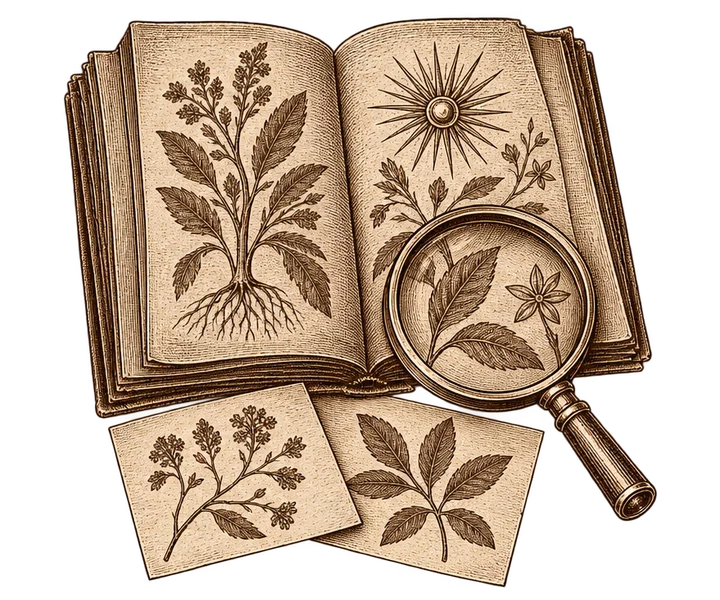
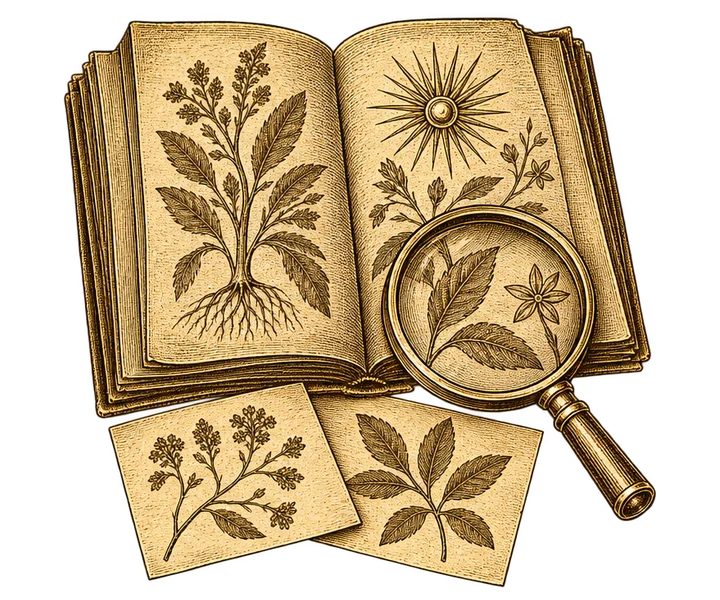
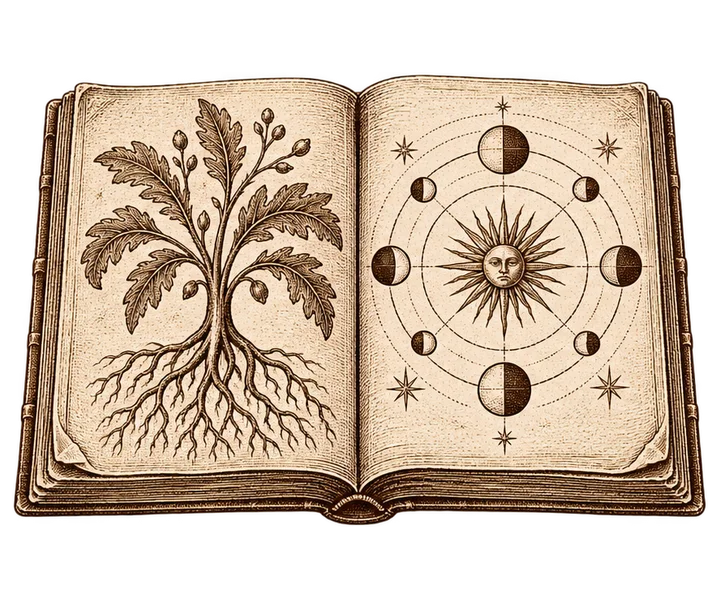
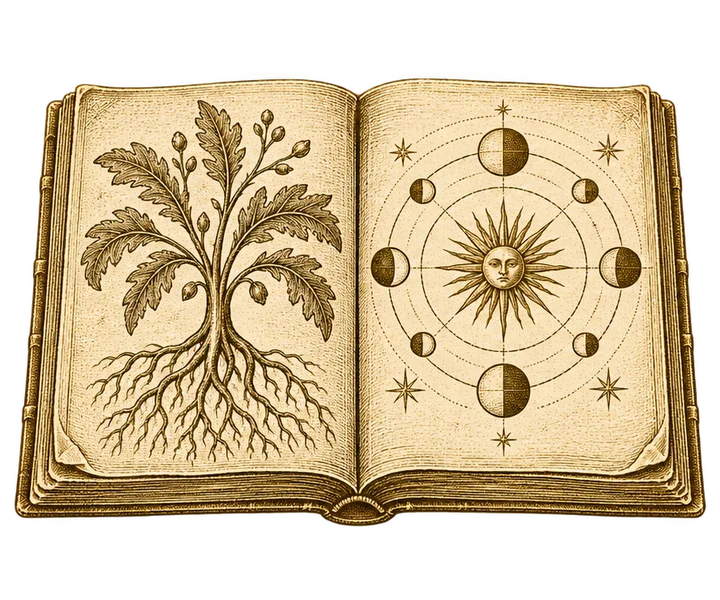
Plant-like forms dominate this illustrated section. A resemblance does not establish botanical identity or medicinal use.
The selector changes contextual notes; the illustration remains the identified 100v–101r spread.
Dating requires care
Material testing is consistent with fifteenth-century manuscripts. Separate parchment dating from claims about when text was written.
Repository account with uncertainties
Yale discusses Rudolf II, a court pharmacist, Barschius, Marci and Kircher. Proposed Bacon authorship and Dee ownership require particular caution.
Repository account
Wilfrid Voynich acquired the manuscript from the Jesuit college at Frascati.
Repository account
H. P. Kraus gave the manuscript to the Beinecke Library.
Undeciphered
The repository supplies digital access but does not systematically evaluate individual proposed decipherments.
Starting point: A structured but unidentified script makes linguistic and cryptographic analysis possible.
Limit: A proposal needs reproducible decoding across unseen passages; isolated apparent words are insufficient.
Starting point: The illustrations suggest several categories of learned or practical material.
Limit: Illustrated themes cannot determine the accompanying language, recipes or ritual purpose.
Starting point: The absence of a confirmed reading leaves alternatives to ordinary language open.
Limit: Lack of decipherment by itself does not establish that the writing is meaningless.
Original illustrative studies · About the artwork
Which visual conventions recur, and which apparent plant identifications depend on speculation?
The Beinecke Cipher (Voynich) Manuscript ↗Digital Collection ↗Compare diagram structure without assuming shared texts or a decoded zodiacal scheme.
The Beinecke Cipher (Voynich) Manuscript ↗Digital Collection ↗Any new symbol, ritual or artwork inspired by these images should retain an original-composition label.
The Beinecke Cipher (Voynich) Manuscript ↗